
Upper Snake River Water Levels 4th Lowest Since 1970.
In February we posted an update concerning the volume of water behind the dams in the upper Snake River system as the system tried to rebuild water inventories following lower-than-average starting water inventories (water stored behind the dams) and a below average snowpack with which to refill it. How much was the system able to rebuild and how will it affect Eastern Idaho irrigation availability?
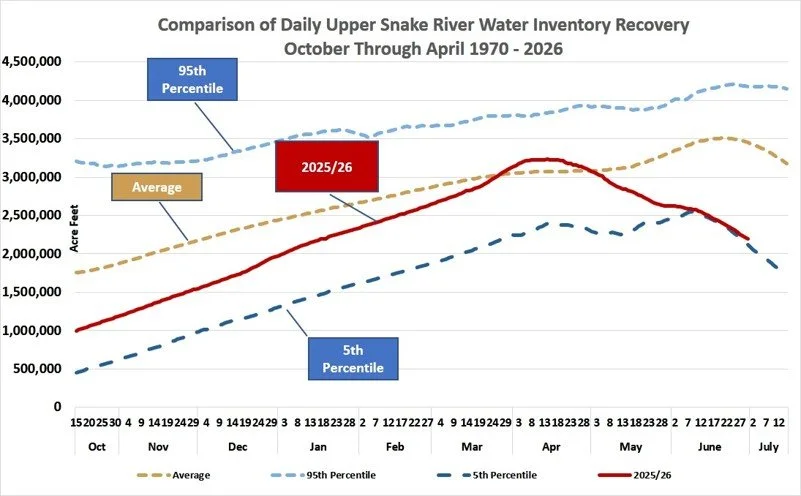
The chart below shows us where that water inventory is to date in acre feet. The gold line is the daily average as we rebuild inventories starting from the end of the previous irrigation season (mid-October) from the 1970 season through 2025. The top light blue line shows the upper 95th percentile across those years. 95% of all years had inventories at or below that line on each date. The lowest dark blue line is the bottom 5th percentile. Only 5% of all years had water levels at or below that line on each date. The red line shows the current inventory through June 30th. As can be seen 2025/26 inventories peaked in early April and have fallen to just above the 5th percentile volume since then.
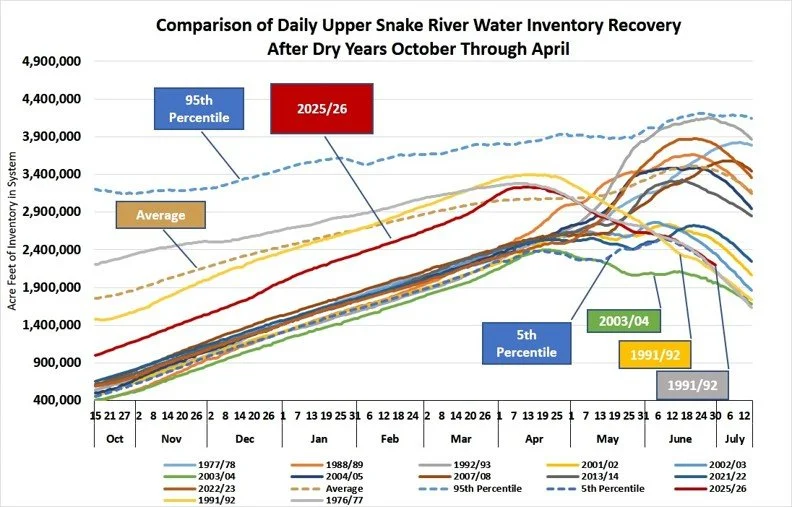
The next chart places the current year into a broader historical context, showing 2025/26 season relative to years coming out of dry weather and lower water inventories. Since 1970, only 3 years were lower than this year as of June 30th; 1976/77 (gray) which started the season with much better inventories, 1991/92 (yellow), and 2003/04 (green), all of which peaked at about the same time in mid-April. Not the worst year we’ve seen but certainly going to be a difficult irrigation season.
Recent changes in water regulation add another layer of pressure in low-water years by affecting both irrigation availability and cost for Idaho growers. Since receiving expanded legislative authority in 2024, the Idaho Department of Water Resources has continued to broaden the Eastern Snake Plain Aquifer Area of Common Ground Water Supply (ESPA), citing concerns over declining aquifer levels and reduced Snake River spring flows that support senior-priority surface water users throughout the Magic Valley.
Groundwater users within the ESPA are now required to participate in an IDWR-approved mitigation plan designed to offset the effect of their groundwater pumping on those senior water right holders. Users who do not participate may face full curtailment by order of IDWR.
These mitigation plans generally require reductions in pumping from individual groundwater wells and also require groundwater districts to acquire “wet” surface water supplies that can be delivered to injured senior surface water users farther down the Snake River. In a low snowpack year like this one, the effects can compound quickly: reduced runoff limits aquifer recharge, lower spring flows reduce supplies to Snake River surface water users, and less surface water remains available for groundwater districts to purchase for mitigation. The result is higher groundwater assessment costs and increased risk of crop yield losses.
Taken together, the current storage picture, historical comparisons, and added regulatory requirements point to a challenging irrigation season across Eastern Idaho. While conditions are not unprecedented, the margin for error is narrow, and growers will likely need to manage water supplies carefully as the season progresses. Continued monitoring of reservoir levels, runoff conditions, and mitigation obligations will be important in understanding how the full impact of this water year develops.