NCREIF Q2 Farmland Values Update #1: US, Delta, Cornbelt, & Southeast
Q2 2026 NCREIF US Farmland Value Regional Review; Regional Divergence Continues as Broader Row Crop Values Stabilize
This is the first of two posts reviewing NCREIF farmland returns through the second quarter of 2026. Here we review the figures for the eastern US, and in the second post covers the western regions and can be found here.
Although rowcrop (annual) farmland appreciation has stabilized or slightly increased, US. Regional divergence remains pronounced despite modest appreciation in the broader U.S. row crop portfolio. Income returns (CAP rates) continue to compress, ranging from 2.16% to 3.43%, emphasizing the need to evaluate both appreciation and current income.
US Rowcrop Ground
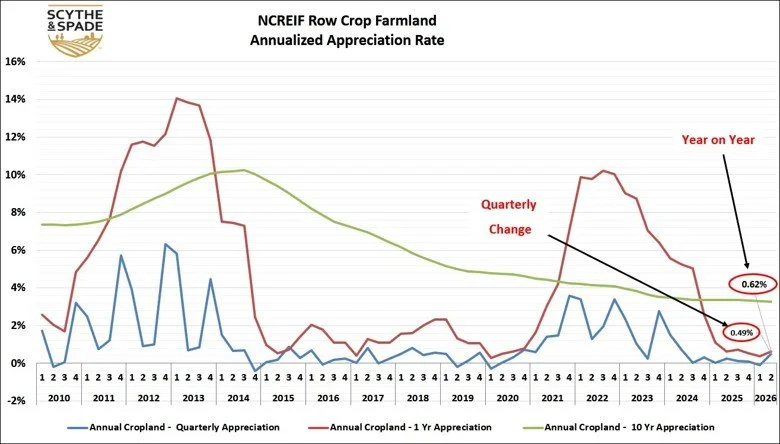
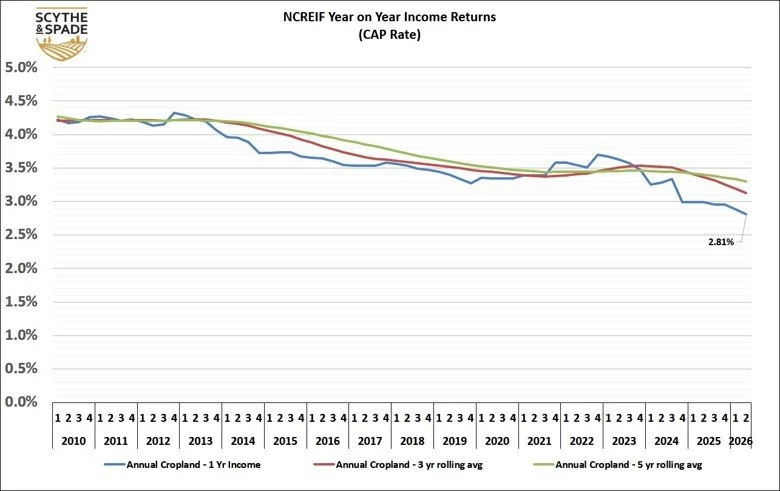
US row crop land values strengthened in Q2 2026 despite continued regional fragmentation beneath the surface, posting a year-over-year increase of +0.62%. Quarter-over-quarter values increased +0.49%, reversing the slight decline recorded in Q1 and reinforcing farmland's characteristic stability relative to other real assets. The year-over-year income return (cap rate) was 2.81%, continuing the longer-term decline in current income yields. Regional performance continues to reflect localized pressures tied to commodity economics, water availability, operating margins, and portfolio balancing.
DELTA STATES
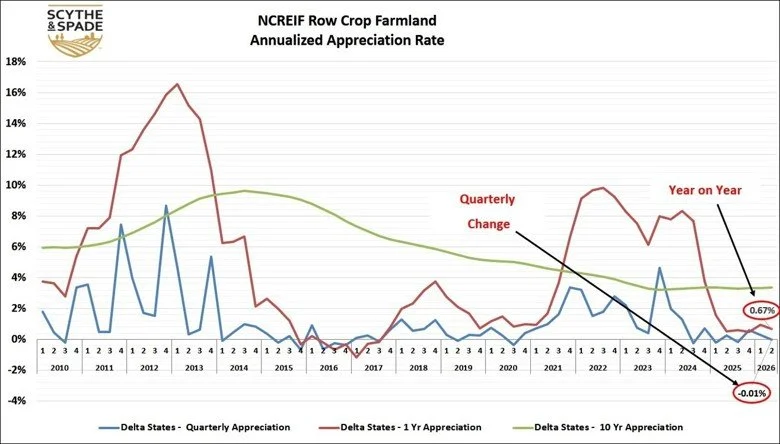
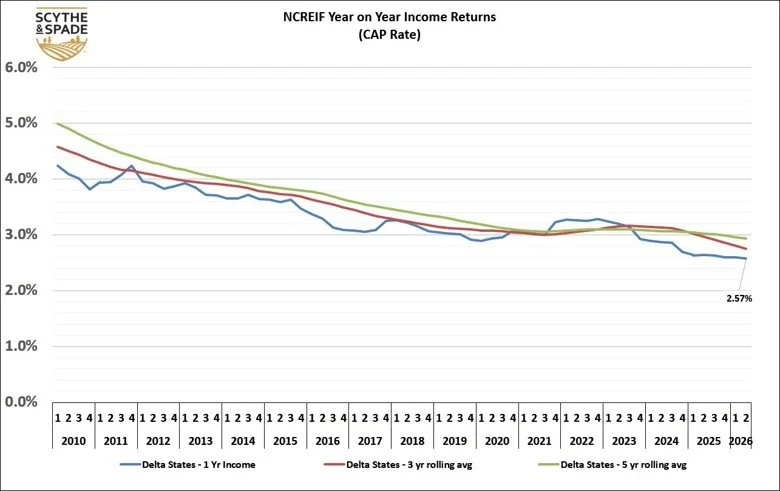
Delta row crop farmland remained stable in Q2 2026, posting a year-over-year increase of +0.67% while the quarter-over-quarter appreciation rate was essentially flat at -0.01%. The region's year-over-year income return (cap rate) was 2.57%. Returns therefore remained positive on an annual basis even as quarterly appreciation paused.
The Delta continues to benefit from lower entry costs and a more favorable relationship between commodity returns and underlying land values relative to the Cornbelt. While producer margins remain compressed, valuation pressure has thus far been less severe than in regions where land values accelerated more aggressively during the 2021-2023 appreciation cycle. Current income returns remain below their longer-term rolling averages, reflecting continued cap-rate compression.
Investor demand also appears comparatively durable in the region as buyers continue searching for productive acreage with lower absolute pricing and acceptable return characteristics.
CORN BELT
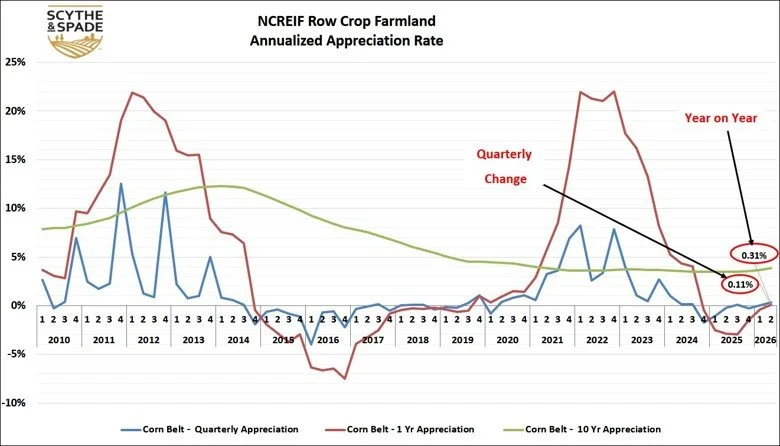
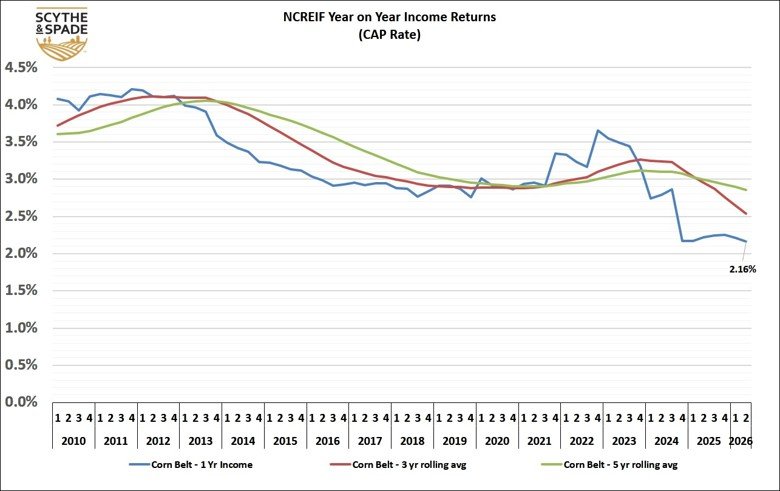
Corn Belt farmland showed signs of stabilization in Q2 2026, with quarter-over-quarter appreciation of +0.31% and a modest year-over-year increase of +0.11%. This represents an improvement from the annual decline recorded in Q1 and throughout 2025. The region's year-over-year CAP rate was 2.16%, the lowest current income return among the regions included in this review.
The current adjustment continues to reflect a correction after several years in which land values materially outpaced the underlying economics of row crop production. Elevated borrowing costs, weaker grain prices, and moderation in producer liquidity continue to pressure transaction activity and buyer enthusiasm, while the lower cash returns highlights compressed cash yields.
That said, Corn Belt land values remain substantially above pre-2021 levels. Long-term institutional interest in the region remains intact given its productivity, infrastructure, and liquidity advantages, though investors are becoming materially more selective on soil quality, drainage, lease structures, and local basis dynamics.
SOUTHEASTERN STATES
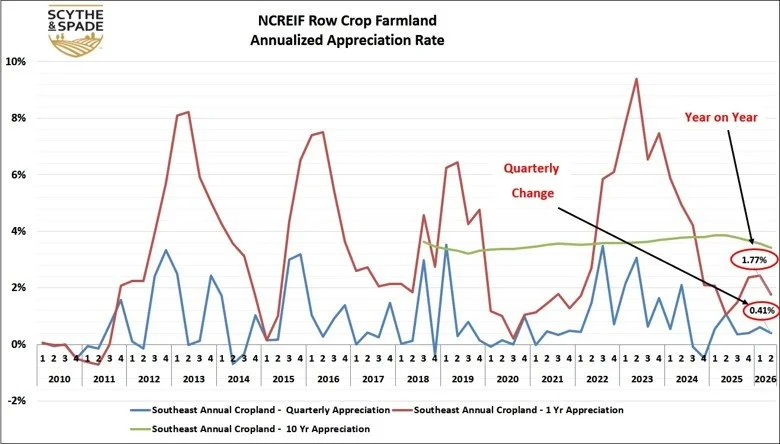
Southeastern states row crop farmland remained among the stronger-performing regions in Q2 2026, posting year-over-year appreciation of +1.77% and quarter-over-quarter appreciation of +0.41%. The annual gain exceeded the +0.62% national annual cropland appreciation rate, while quarterly performance remained positive but slightly below the +0.49% national rate.
The appreciation trend has moderated from the stronger gains recorded during 2022 and 2023, but both the current annual rate and the longer-term appreciation trend remain positive. This indicates that regional land values have continued to advance despite tighter agricultural operating margins and higher financing costs.
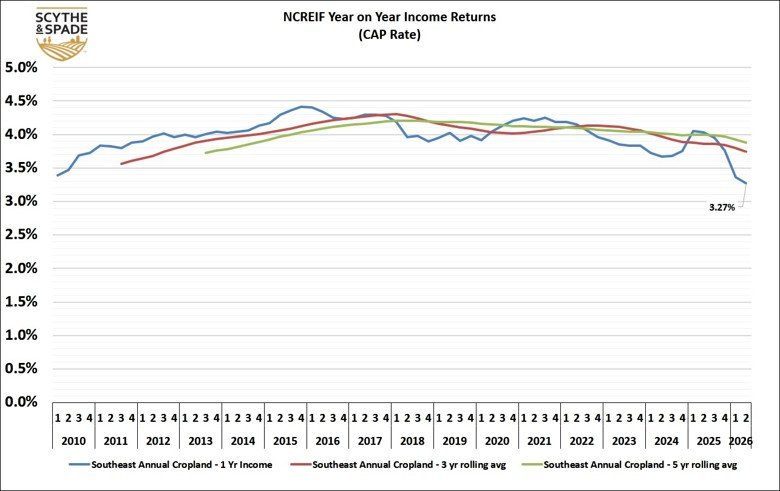
The Southeast's year-over-year income return declined to 3.27% in Q2 2026, below the region's three- and five-year rolling averages but above the 2.81% national annual cropland income return. Taken together, positive appreciation and a comparatively higher current income yield continue to support the region's relative attractiveness, although the decline in income returns warrants continued attention to cash rents, operating costs, and tenant profitability.