
Oregon Farm Management Case Study: Agricultural Due Diligence & Asset Optimization
Challenge
When a large-scale agricultural operation in Eastern Oregon faced financial distress, stakeholders needed a clear strategy to preserve and maximize asset value. This case study demonstrates how expert farm management, agricultural due diligence, and asset liquidation services transformed a struggling property into a high-performing investment opportunity.
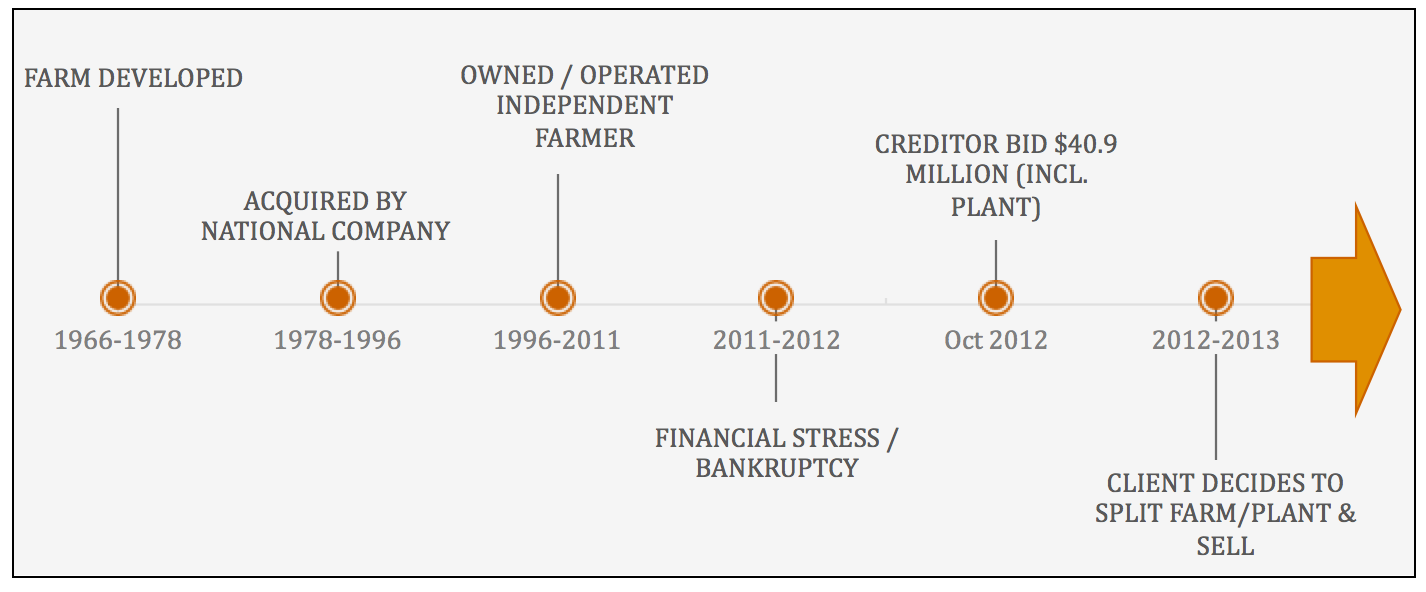
Key Challenges in Farm Management
1966 – 1978
During this time the farm was owned and operated by a large, national food company. This company was responsible for implementing the farm’s irrigation system which included a buried mainline for surface water, two booster pump stations, and 12 ancillary pump stations.
1978 – 1996
The subsequent owner was another large, national food company.
1996 – 2011
In 1996, the farm was acquired by a local independent farmer and operated for almost 15 years. The most recent crops were harvested in 2010.
2011 – 2012
The farmer incurred substantial debt and was forced to declare bankruptcy in 2012.
2012 – 2013
Our client, a creditor, obtained the farmland and plant parcel through the bankruptcy court in October 2012.
2012 – 2013
The Client conducted various internal and external studies on the property. An appraisal concluded a value of $24.5 million for the farm with a separate value of $10-$12 million for the plant. Initial estimates were as high as $8.2 million in capital improvements to the plant and at least $14 million in improvements for the farm. The Client was also incurring approximately $100,000 in monthly expenses with the property producing no revenue. After their internal review, the Client decided to sell the property.

Solution: Agricultural Due Diligence & Strategy
Based on our position in the market and knowledge of the industry, we understood the history and complexity of this property.
Initial concerns:
Dormant for three years
Negative reputation in the community
Irrigation system and improvements vandalized / inoperable
Multiple parcels / non-contiguous
Complex legal description
Numerous title exceptions and easements
Complex water rights and sources
Unknown soils and environmental issues
Initial recommendations:
Review title exceptions and order ALTA Survey
Obtain and analyze soils tests
Conduct Phase I Environmental Assessment
Conduct additional water studies (to confirm or refute early reports)
Work with Oregon State water rights examiner to resolve water rights issues
Additional Concerns Discovered in Due Diligence Process
Legal:
Preliminary Title Report did not include all parcels; search was extended and additional exceptions were found. After a detailed review the exceptions were cleaned-up and minimized.
Water Rights originally presented as owned included POU (Place of Use) acres appurtenant to lands outside the farm boundary.
Although physical access was evident, there was no legal easement to the northern part of the property.
Expired lease with Oregon Department of State Lands affected farmed acres and water rights usage.
Certain water rights with Oregon State required additional negotiation.
Missing easement for mainline across adverse property.
Legal description discrepancies found.

Soils:
Soils under multiple proposed pivot locations were tested and analyzed by soil specialist.
Water:
Additional due diligence on the water and utilities for this property included the following:
Easements for the water delivery system
Obligations on the part of third parties with respect to water delivery system
Obligations on the part of owner with respect to water system on adverse lands
Ownership and usage of water with Oregon State Lands
POU acres appurtenant to lands outside the farm boundary (possible loss of WR acres)
Prior to retaining our services, the Client had commissioned a water study from a nationally-recognized water engineering company. That company estimated a cost of more than $14 million in improvements needed to include 86 new pivots covering 5,040 acres.

Scythe & Spade conducted additional water studies and collaborated with several regional and local firms to compare and contrast the initial report findings. Subsequent water plans were able to reduce the number of pivots needed from 86 to 60 while increasing the acreage covered from 5,040 to 5,915 acres.

Assessing Market Value and Sales Potential
Initial offers received were in the range of 50-60% of the asking price. We marketed the listing to our network of buyers and were able to get a substantially higher offer from an experienced investor with a history of improving distressed properties. The final contracted price was 25% higher than the next highest bid.

Ongoing Relationship with New Owner
Negotiate purchase of isolated 18 acres owned by Oregon Department of Transportation
Resolve dispute with neighbor on ownership of 10 acres on east side of farm
Negotiate transfer of one-acre “wedge” under northwest pivot which is not legally part of the farm
Negotiate lease/sale with Oregon Department of State Lands
Provide mapping and GIS services for implementation of new irrigation plan
Key Takeaways for the Agricultural Investor
Thorough due diligence reduces risk and uncovers hidden value
Strategic farm management can significantly increase asset value
Irrigation and soil optimization are critical to profitability
Proper asset positioning leads to stronger exit opportunities
Work With Agricultural Asset Management Experts
Whether you're managing a distressed farm, evaluating an acquisition, or preparing an asset for sale, expert guidance can make a measurable difference.
Our agricultural consulting services include:
Contact us today to discuss your agricultural investment or farm management needs.